eLearning
30 April 2026
Health & Safety Training with Multilingual eLearning for a Diverse Workforce

Delivering effective health and safety training is one of the most critical responsibilities for any organisation. But for businesses with a diverse workforce, the need for multilingual elearning brings additional challenges.
At First Media, we’re all about creative, visually-led elearning content. This approach becomes particularly valuable for those needing to train teams with multiple language needs.
By reducing text-dense training content, you’re less reliant on subject matter experts across multiple languages, which could prove expensive, and less at risk of errors generated by trying to automate the process of translating large amounts of text using AI.
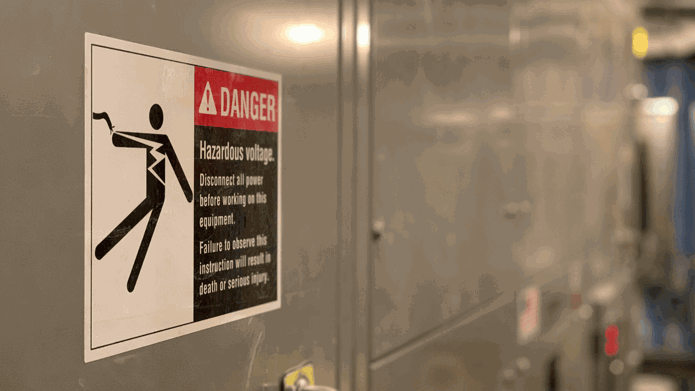
Whether you operate in hospitality, manufacturing, logistics or facilities management, ensuring every employee understands safety procedures is not just a compliance requirement. It is essential for protecting people, maintaining operational standards and reducing risk.
Traditional approaches to training often fall short in these environments. Language barriers, varying literacy levels and cultural differences can all reduce the effectiveness of standard elearning or classroom-based delivery.
So how do you design health and safety elearning that works for everyone?
The Challenge of Multilingual Safety Training
Many organisations assume that translating training content is enough. In reality, this is only part of the solution.
Common challenges include:
-
Employees with limited proficiency in the primary business language
-
Low confidence in reading or writing, even in their native language
-
Cultural differences in how safety is perceived and communicated
-
High staff turnover, requiring scalable and repeatable training
-
Time pressures that limit the ability to deliver lengthy courses
In sectors like cleaning, hospitality and logistics, these challenges are particularly pronounced. Workforces are often diverse, fast-moving and operationally focused, meaning training must be both efficient and immediately applicable.
Why Traditional Training Falls Short
Standard health and safety training often relies heavily on:
-
Text-heavy content
-
Long-form modules
-
Passive learning formats
-
One-size-fits-all delivery
This creates several problems:
-
Learners may not fully understand key safety messages
-
Engagement is low, reducing knowledge retention
-
Critical behaviours are not reinforced in real-world contexts
For multilingual teams, these issues are amplified. If learners cannot easily process the content, they are far less likely to apply it in practice.
What Effective Multilingual eLearning Looks Like
To deliver meaningful impact, health and safety training needs to be designed with accessibility and clarity at its core.
1. Visual-First Learning Design
Reducing reliance on text is one of the most effective ways to improve understanding.

This includes:
-
Video-based scenarios
-
Animation to demonstrate processes
-
Iconography and visual cues
-
Real-world simulations
Visual learning helps bridge language gaps and ensures key messages are understood quickly.
2. Simple, Plain Language
Where text is required, it should be:
-
Clear and concise
-
Free from jargon
-
Structured in short, digestible sections
Even for native speakers, complex language can reduce comprehension. Simplicity benefits everyone.
3. Multilingual Delivery (Beyond Translation)
Providing multiple language options is essential, but it needs to be done well.
Effective approaches include:
-
Professionally localised translations (not automated only)
-
Voiceover in native languages
-
Cultural adaptation of examples and scenarios
This ensures training feels relevant and accessible, rather than generic.
4. Microlearning for Busy Teams
Short, focused modules are far more effective than long courses.
Benefits include:
-
Faster completion rates
-
Better knowledge retention
-
Easier onboarding for new staff
In high-turnover environments, this is particularly valuable.
5. Scenario-Based Learning
Health and safety is about behaviour, not just knowledge.
Scenario-based learning allows employees to:
-
See realistic situations
-
Make decisions in context
-
Understand consequences
This approach is far more effective at driving real-world behaviour change.
Real-World Example: Act-Clean Health & Safety Training
A strong example of this approach in action is First Media’s work with Act-Clean.
The Challenge
Act-Clean needed to deliver health and safety training to a highly diverse workforce, including many employees with:
-
Limited English proficiency
-
Varying levels of formal education
-
Busy, operational roles with limited time for training
Traditional training methods were not achieving the required levels of engagement or understanding.
The Solution
First Media developed a tailored elearning solution designed specifically for this audience.
Key features included:
-
Highly visual content to reduce reliance on text
-
Clear, simple messaging to improve comprehension
-
Multilingual support to reflect the workforce
-
Short, focused modules for easy access and completion
-
Real-world scenarios relevant to cleaning and hygiene tasks
The result was a training experience that was not only accessible, but genuinely engaging.
The Impact
By aligning the design with the needs of the workforce, the training:
-
Improved understanding of key safety procedures
-
Increased engagement across diverse teams
-
Supported consistent standards across locations
-
Reduced risk through better-informed behaviours
This demonstrates how thoughtful design can transform compliance training into something far more effective.
Related Examples Across Sectors
While Act-Clean is a clear example in facilities and hygiene, the same principles apply across industries.
Healthcare
In healthcare environments, training must be:
-
Accurate
-
Accessible under time pressure
-
Easy to apply in practice
First Media’s work on elearning for NHS clinical service practices has shown how clear, scenario-based digital learning can support consistent clinical and operational standards across diverse teams.
Early Careers and Apprenticeships
With younger or less experienced learners, engagement is critical.
Projects such as those delivered for League Football Education demonstrate how:
-
Interactive design
-
Short-form content
-
Relatable scenarios
can improve understanding and retention, even when learners have varying levels of prior knowledge.
Health & Safety eLearning Best Practices
If you are planning health and safety training for a multilingual workforce, focus on the following:
Design for understanding, not just compliance
Training should prioritise clarity and usability, not just ticking regulatory boxes.
Reduce cognitive load
Keep content simple, structured and easy to process.
Use visuals wherever possible
Show, don't just tell.
Think global, design local
Adapt content to reflect language and cultural differences.
Focus on behaviour change
Training should influence what people do, not just what they know. Real behaviour change is the goal.
The Future of Health and Safety Training
As workforces become more diverse and distributed, the need for inclusive, accessible training will only increase.
Organisations that invest in well-designed, multilingual elearning will benefit from:
-
Safer working environments
-
More consistent standards
-
Higher engagement and completion rates
-
Reduced compliance risk
Most importantly, they will ensure that every employee, regardless of language or background, has the knowledge and confidence to work safely.
Final Thoughts
Health and safety training is too important to be lost in translation.
By combining visual design, clear messaging and culturally aware delivery, organisations can create training that truly works for everyone.
When you design with the learner in mind, the results will speak for themselves.
Could we help your organisation with engaging health and safety training and / or multilingual elearning content? Contact us at First Media.

Why choose First Media?

Improve your overall performance
Get high-quality creative, eLearning faster and stand out from the competition.

Become more agile and responsive
We deliver engaging, high-quality training and support wherever you are and whenever you need it.

Elevate your team
Our in-house team of designers will work with you every step of the way to ensure you get the right look.

Captivate your audience
We combine novel ways to appeal to our learners natural curiosity and engagement.
Make your ideas come to life with First Media.