eLearning
27 February 2026
L&D for Real Behaviour Change - How to Leverage eLearning

In this post, we look at how L&D teams can leverage elearning to ensure real behaviour change - going beyond training delivery that simply imparts knowledge.
Going beyond “completed training”
There’s a reason so many organisations can point to rising course completions while still struggling with the same conduct, safety, service, or leadership issues. Knowledge and behaviour are related - but they’re not the same outcome, and they don’t respond to the same training approach.
If you want lasting behavioural change, L&D needs to design for transfer: what people do differently in real situations, under real pressure, when nobody’s watching.
Knowledge vs behaviour change: two different jobs
Knowledge-building is about helping people understand something: policies, products, processes, rules, concepts. This is often achieved through clear explanation, examples, checks for understanding, and reinforcement.
Behaviour change is about helping people choose and execute the right action at the right moment - even when it’s inconvenient, socially awkward, time-pressured, or emotionally charged.
That requires more than information. It requires practice, feedback, motivation, and an environment that supports the new behaviour.
A useful lens is:
-
Knowledge: “Do they know what ‘good’ looks like?”
-
Behaviour: “Will they do it - consistently - in the moments that matter?”
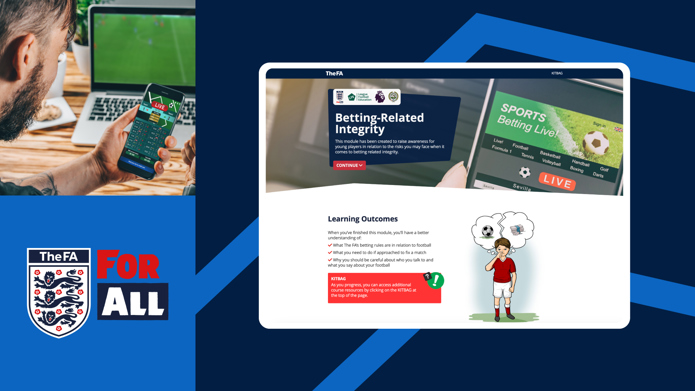
This is why well-designed behavioural programmes lean heavily on realistic scenarios and decision-making practice. Consider how The FA’s betting-related integrity course targets young players: the goal isn’t just awareness of rules, but shaping judgement in high-risk situations before they encounter them.
Why behavioural change fails (even with good content)
Behaviour change usually breaks down in one of four places:
-
The content is correct, but not contextual. Learners can repeat the rule, but don’t recognise when it applies.
-
There’s no rehearsal under realistic conditions. People can’t perform a skill they’ve never practised.
-
There’s no reinforcement after the module. A single exposure rarely survives the realities of work.
-
The environment punishes the “right” behaviour. If doing the right thing costs time, status or sales, knowledge won’t win.
That’s why programmes built around decision points and consequences (not just information screens) tend to outperform “content dumps”.
The behavioural change toolkit L&D should use
To reliably move behaviour, combine these approaches - each solves a different part of the problem.
1) Scenario-based learning (for judgement, not recall)
Scenarios simulate the moment of choice. They create “if this, then that” mental pathways - exactly what people need in the workplace.
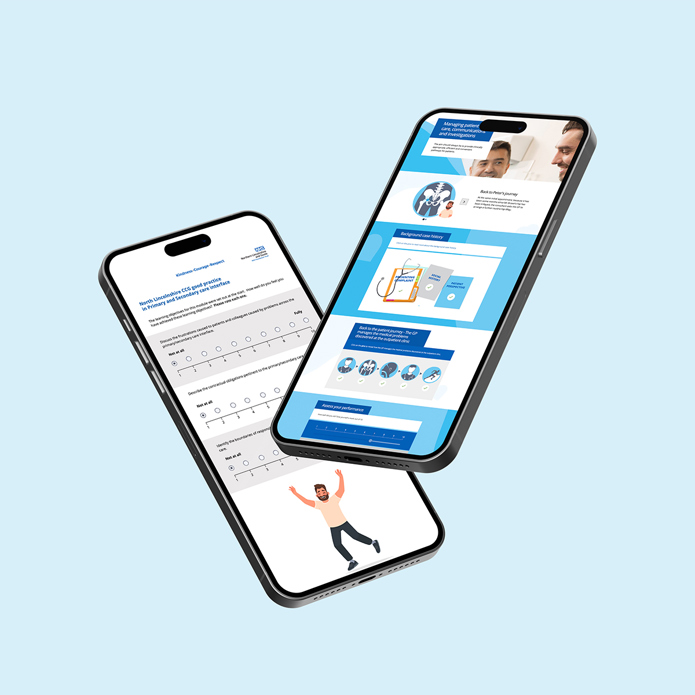
First Media’s NHS elearning course in clinical service is a good example of designing around workflow: learners are guided through stages of a patient journey to clarify boundaries of responsibility between primary and secondary care - a classic behavioural risk area where mistakes happen in transitions, not in theory.
What this looks like in elearning:
-
branching choices (“what would you do next?”)
-
realistic consequences (customer impact, safety risk, compliance breach)
-
feedback that explains why a choice works (and when it doesn’t).
2) Microlearning + repetition (for habit formation)
If you’re aiming for consistent behaviour, you need spaced reinforcement. Short modules also fit work realities, increasing the likelihood of completion and recall.
The NHS module was intentionally designed to be completed in 20 minutes, which supports uptake and reduces friction - critical if you need widespread adoption across busy teams.
3) Personalisation (for relevance and motivation)
Behaviour change accelerates when learners feel “this is about me, in my role”.
The EFL’s Playing for Inclusion training programme is structured so learners select their role and club, then follow a pathway tailored to them - making inclusion training feel less generic and more immediately applicable.
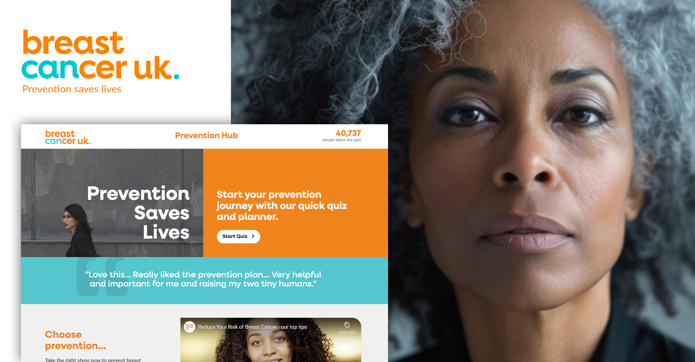
Similarly, Breast Cancer UK’s Prevention Hub uses a branching quiz and personalised action plan - a strong behaviour-change pattern: assess → personalise → commit to next steps.
4) Social proof and culture cues (for “what we do here”)
A big part of behaviour is social. Learners don’t just ask “what’s right?” - they ask “what do people like me do here?”
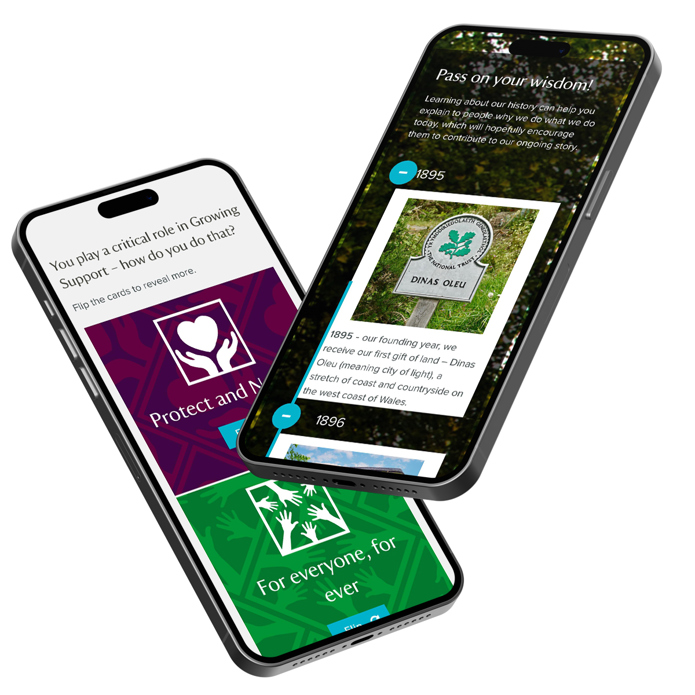
Programmes like ‘Spotlight’ - a National Trust digital learning programme designed to reinforce values and consistency across staff and volunteers, helping embed “how we do things” organisation-wide.
5) Performance support (for behaviour at the point of need)
Even strong training can fail if learners can’t access help in the moment. Behaviour change often needs:
-
job aids
-
checklists
-
quick reference tools
-
embedded how-to support in systems
This is why modern digital training often blends learning with “in-the-flow” support. For example, Zellis replaced static manuals with 119 AI-driven training videos designed around real tasks inside the product experience.
Where bespoke elearning beats off-the-shelf for behaviour change
Off-the-shelf courses can be useful for baseline awareness (especially where content is standardised). But when you’re targeting real behaviour change, bespoke elearning gives you levers generic packages usually can’t:
1) Your situations, your risks, your language
Behaviour change happens in gives-you-a-sinking-feeling moments: the awkward conversation, the time-pressure shortcut, the “everyone does it” norm. Bespoke content can mirror your real scenarios, roles, and constraints - like The FA’s focus on betting integrity risks faced by academy players.
2) Authenticity and credibility
Learners are more likely to internalise training that reflects their world. First Media’s Act-Clean programme used workplace imagery, multiple languages, and an LMS approach that made the experience accessible for a diverse workforce - with tracking and reporting integrated into their HR setup.
3) Targeted pathways instead of blanket content
Personalised pathways (like the EFL approach) reduce noise, increase relevance, and improve the chance of action.
4) Measurable outcomes designed in from day one
Bespoke programmes can be built around the metrics that matter - not just completion. First Media explicitly positions its eLearning design around specific, measurable goals and continuous improvement.
How to measure behaviour change (properly)
If you only measure satisfaction and completion, you’re measuring training activity, not impact.
For behaviour change, use a layered measurement plan:
Level 1: Learning evidence (immediate)
-
scenario decisions (what learners chose)
-
confidence ratings (pre/post)
-
knowledge checks targeted at critical errors
Level 2: Behaviour signals (in the workflow)
-
manager observation checklists (2 to 4 behaviours, max)
-
quality audits (eg compliance checks, call scoring, record accuracy)
-
operational indicators (handover errors, incident reporting, complaint types)
Level 3: Outcome metrics (business impact)
-
safety incidents / near misses
-
customer satisfaction / churn / rework
-
time-to-competence for new starters
-
reduced escalations, fewer policy breaches
The trick is to pick a small number of behaviours that drive outcomes, then instrument them. Track them before rollout, then at 30/60/90 days post-learning with reinforcement nudges.
A practical blueprint: turning a “knowledge course” into behaviour change
If you’re looking at an existing course and thinking “people know this, but don’t do it”, here’s a reliable upgrade path:
-
Define the target behaviour in observable terms (“uses the escalation script within 60 seconds”, “records consent correctly every time”, “challenges inappropriate comments”).
-
Identify the 3-5 high-risk moments where it breaks down.
-
Build scenario practice around those moments, with branching and consequences.
-
Add micro-reinforcement (short follow-ups, quizzes, prompts) over 4 to 6 weeks.
-
Create manager enablement (observation prompts + coaching questions).
-
Measure behaviour + outcomes, not just completion.
That’s how L&D moves from “we delivered training” to “we changed what people do”.
Want to discuss how bespoke elearning development from First Media can help to deliver real behaviour change for your organisation?
Contact us for an informal chat about your needs.


Why choose First Media?

Improve your overall performance
Get high-quality creative, eLearning faster and stand out from the competition.

Become more agile and responsive
We deliver engaging, high-quality training and support wherever you are and whenever you need it.

Elevate your team
Our in-house team of designers will work with you every step of the way to ensure you get the right look.

Captivate your audience
We combine novel ways to appeal to our learners natural curiosity and engagement.
Make your ideas come to life with First Media.